Extruder Crosshead - A Comprehensive Comparison of the Two Main Types
Quick answer: An adjustable extruder crosshead uses a movable die center (about a ±5 mm range) to run many product sizes on one machine, while a fixed center crosshead locks the die position for higher concentricity (±0.02 mm) and a roughly 30% lower defect rate on single-spec, high-volume lines. Choose adjustable for flexibility, fixed center for consistency.
When it comes to extruder crossheads, design is never one-size-fits-all.
Some prioritize stability, while others are engineered for flexibility. That’s why understanding the two most common designs--Adjustable Extruder Crosshead and Fixed Center Extruder Crosshead—is critical for engineers, buyers, and procurement teams alike.
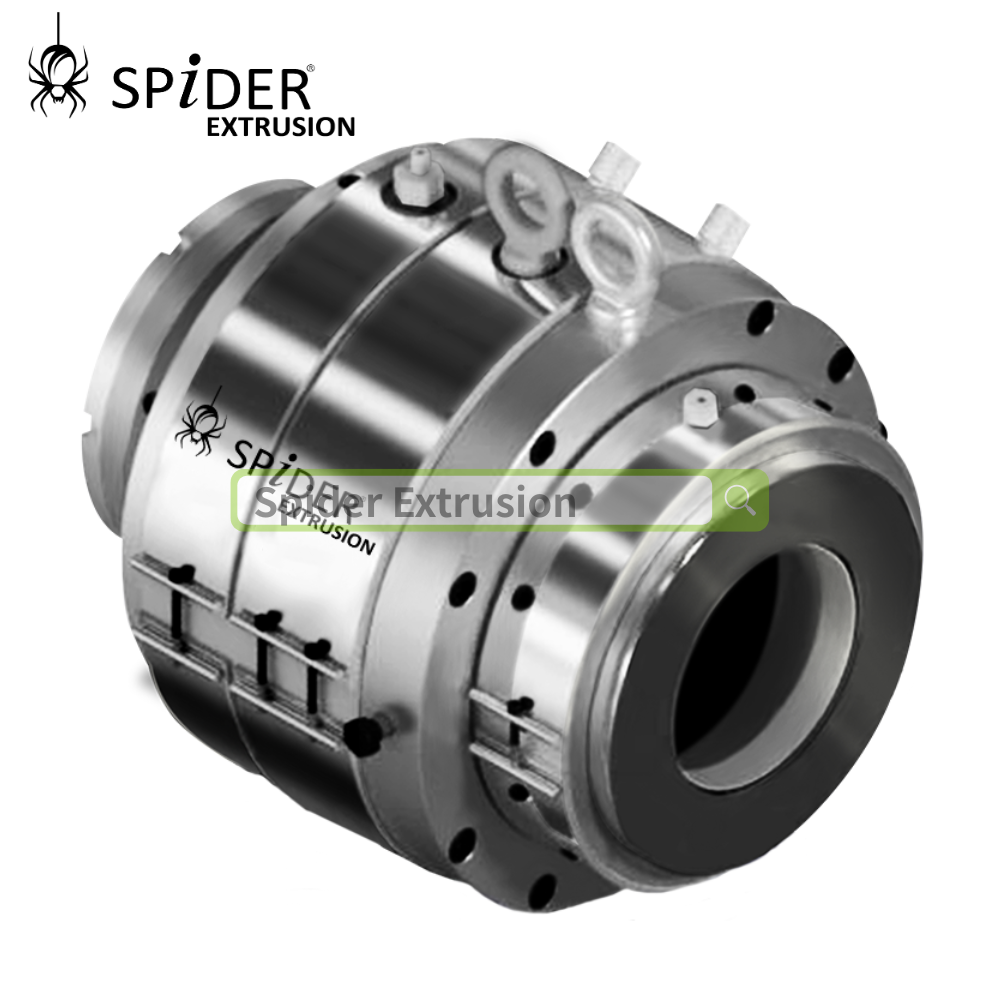
The extrusion crosshead design determines how materials flow through the crosshead die and extrusion die head.
An adjustable crosshead offers flexibility and precise control, while a fixed center crosshead excels in simplicity and consistency.
Each choice directly impacts production efficiency, defect rates, and long-term operating costs.
In this article, SPiDER Extrusion provides a professional comparison of these two design types, diving deep into their features, pros and cons, and ideal use cases.
By the end, you'll have a clear understanding of which extruder crosshead best suits your production line—and why choosing the right one can elevate both your efficiency and product quality.
Some prioritize stability, while others are engineered for flexibility. That’s why understanding the two most common designs--Adjustable Extruder Crosshead and Fixed Center Extruder Crosshead—is critical for engineers, buyers, and procurement teams alike.
The extrusion crosshead design determines how materials flow through the crosshead die and extrusion die head.
An adjustable crosshead offers flexibility and precise control, while a fixed center crosshead excels in simplicity and consistency.
Each choice directly impacts production efficiency, defect rates, and long-term operating costs.
In this article, SPiDER Extrusion provides a professional comparison of these two design types, diving deep into their features, pros and cons, and ideal use cases.
By the end, you'll have a clear understanding of which extruder crosshead best suits your production line—and why choosing the right one can elevate both your efficiency and product quality.
|
|
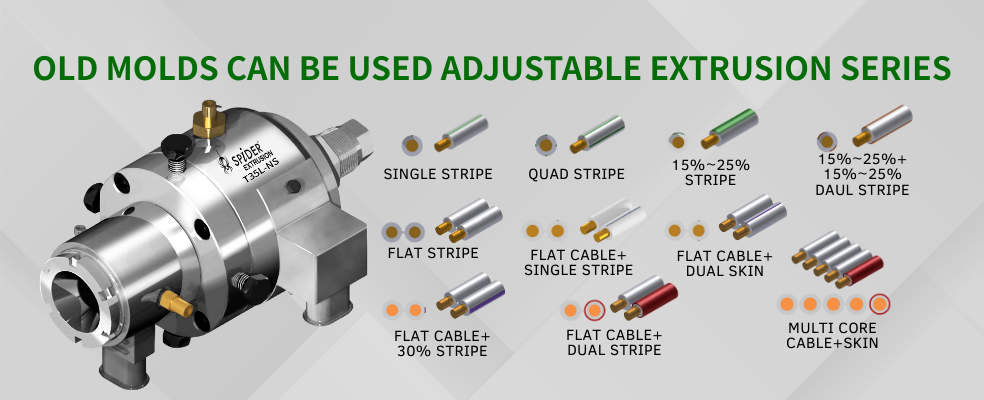
Adjustable Extruder Crosshead
The Adjustable Extruder Crosshead is the optimal choice for multi-specification production.
I recall working with a military cable manufacturer that needed to produce a wide range of cable diameters—from 0.5 mm to 50 mm.
With just one set of equipment, the adjustable extruder crosshead enabled them to meet all their production needs.
Key Technical Features:
1. Adjustable range typically ±5 mm, covering about 80% of common product sizes
2. Ideal for diverse product specifications
3. Lower initial investment and reduced maintenance costs
4. Requires experienced operators with an estimated learning curve of around 6 months
I recall working with a military cable manufacturer that needed to produce a wide range of cable diameters—from 0.5 mm to 50 mm.
With just one set of equipment, the adjustable extruder crosshead enabled them to meet all their production needs.
Key Technical Features:
1. Adjustable range typically ±5 mm, covering about 80% of common product sizes
2. Ideal for diverse product specifications
3. Lower initial investment and reduced maintenance costs
4. Requires experienced operators with an estimated learning curve of around 6 months
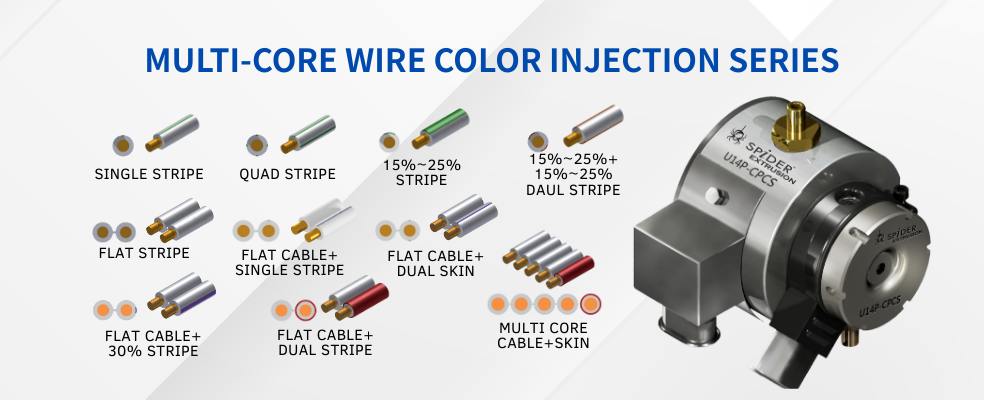
Fixed Center Extruder Crosshead
The Fixed Center Extruder Crosshead is my top recommendation for beginners, primarily because of its "foolproof" reliability.
Across the 300+ production lines I’ve supported, those using fixed center crossheads have shown, on average, a 30% lower defect rate compared to adjustable models.
Key Technical Features:
Fixed center conduit position, eliminating operator adjustment errors
Setup time of 15–30 minutes, which is 70% faster than adjustable models
Ideal for mass production of a single product specification
Achieves concentricity precision of ±0.02 mm
Higher initial investment, but better long-term ROI than adjustable crossheads
Maintenance and cleaning time reduced by 50% compared to conventional designs
Designed for 24/7 automated production lines
Radial flow uniformity: variation < 2%
No skilled operator required; learning curve is approximately one day
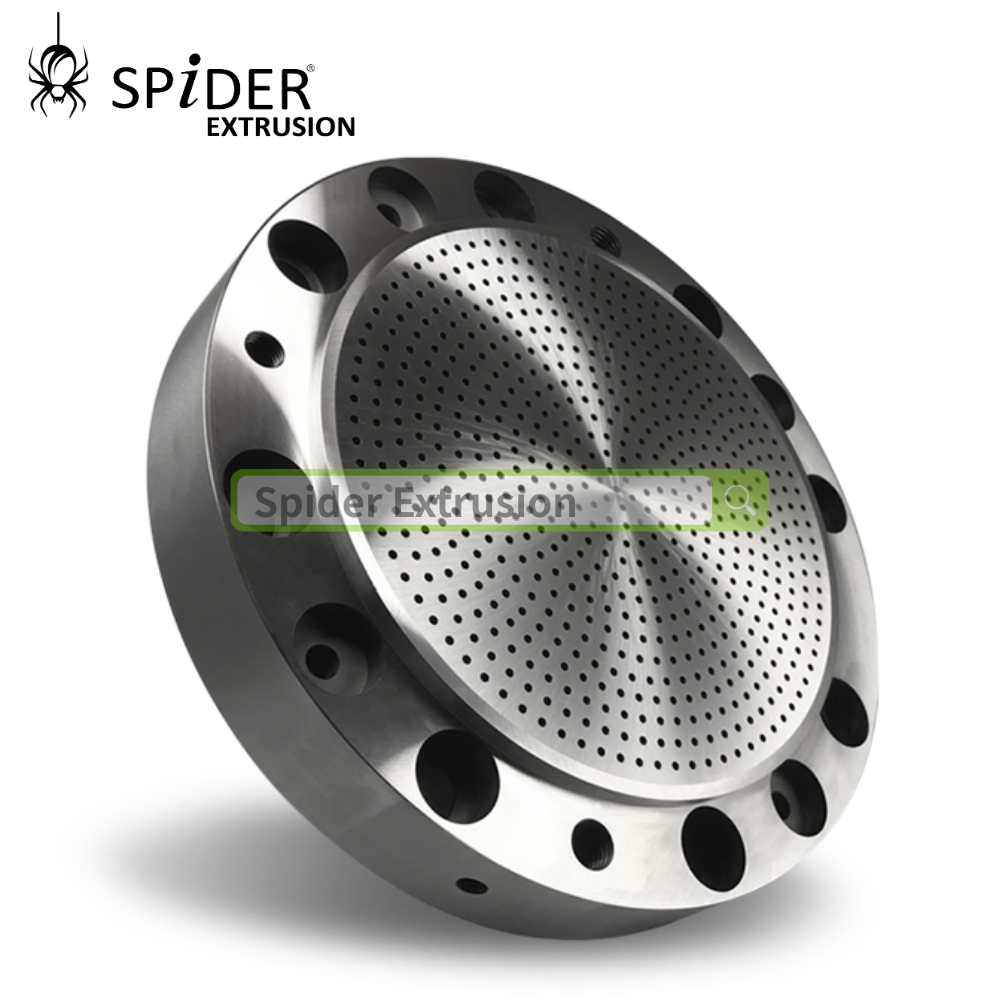
Both crosshead types are only one part of the tooling stack—see our complete guide to extrusion tools for how dies, crossheads, and breaker plates work together, and our breaker plate guide for how melt is stabilized before it reaches the crosshead.
Across the 300+ production lines I’ve supported, those using fixed center crossheads have shown, on average, a 30% lower defect rate compared to adjustable models.
Key Technical Features:
Fixed center conduit position, eliminating operator adjustment errors
Setup time of 15–30 minutes, which is 70% faster than adjustable models
Ideal for mass production of a single product specification
Achieves concentricity precision of ±0.02 mm
Higher initial investment, but better long-term ROI than adjustable crossheads
Maintenance and cleaning time reduced by 50% compared to conventional designs
Designed for 24/7 automated production lines
Radial flow uniformity: variation < 2%
No skilled operator required; learning curve is approximately one day
Both crosshead types are only one part of the tooling stack—see our complete guide to extrusion tools for how dies, crossheads, and breaker plates work together, and our breaker plate guide for how melt is stabilized before it reaches the crosshead.
Other blog posts
SPiDER EXTRUSION Joins HANNOVER MESSE 2025 for the First Time
SPiDER EXTRUSION Representing at HANNOVER MESSE 2025 ...
|

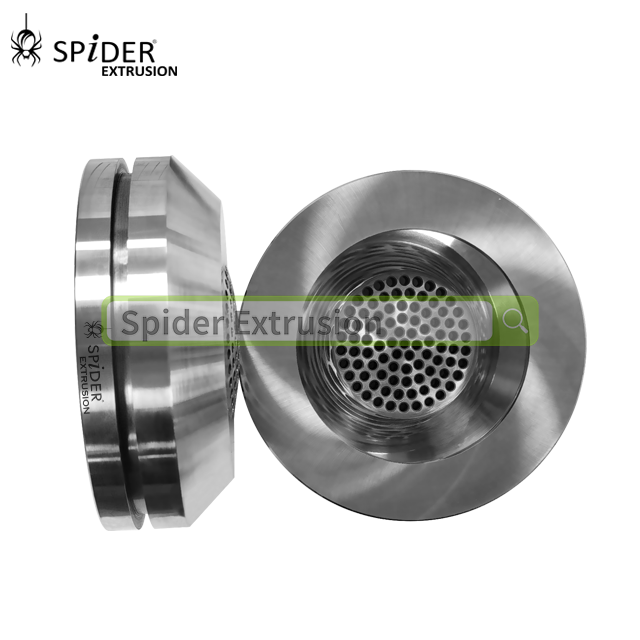
What Is a Breaker Plate? Complete Guide for Extrusion Beginners
Discover how breaker plate in extrusion improves melt consistency, why breaker plate for extruder enhances control....
|
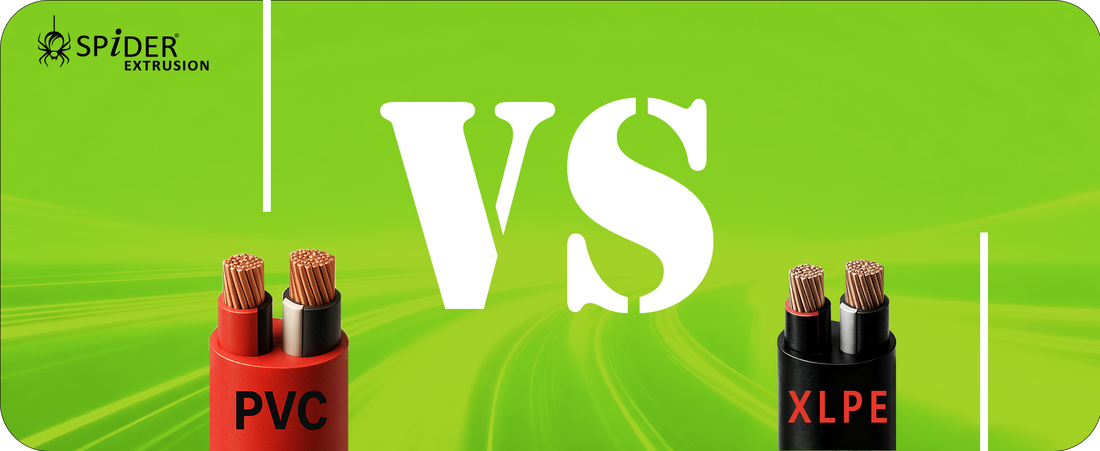
PVC vs XLPE Cable Insulation: Pros and Cons Explained
In the cable manufacturing industry, one question never seems to go away: PVC vs XLPE cable...
|
FREQUENTLY ASKED QUESTIONS
What is the difference between an adjustable and a fixed center extruder crosshead?
An adjustable crosshead has a movable die center (about ±5 mm of travel), letting one machine cover roughly 80% of common product sizes. A fixed center crosshead locks the die position permanently, trading that flexibility for higher concentricity precision (±0.02 mm) and a simpler, more repeatable setup.
An adjustable crosshead has a movable die center (about ±5 mm of travel), letting one machine cover roughly 80% of common product sizes. A fixed center crosshead locks the die position permanently, trading that flexibility for higher concentricity precision (±0.02 mm) and a simpler, more repeatable setup.
Which crosshead design has a lower defect rate?
Across more than 300 production lines SPiDER EXTRUSION has supported, fixed center crossheads have shown, on average, a 30% lower defect rate than adjustable models, largely because the fixed conduit position removes operator adjustment error.
Across more than 300 production lines SPiDER EXTRUSION has supported, fixed center crossheads have shown, on average, a 30% lower defect rate than adjustable models, largely because the fixed conduit position removes operator adjustment error.
How long does it take to train an operator on each type?
A fixed center crosshead needs no skilled operator and has a learning curve of about one day. An adjustable crosshead requires experienced operators and an estimated six-month learning curve to run reliably.
A fixed center crosshead needs no skilled operator and has a learning curve of about one day. An adjustable crosshead requires experienced operators and an estimated six-month learning curve to run reliably.
How fast is a changeover on a fixed center crosshead?
Setup time runs 15-30 minutes, about 70% faster than adjustable models, because there is no die-center alignment step to repeat between runs.
Setup time runs 15-30 minutes, about 70% faster than adjustable models, because there is no die-center alignment step to repeat between runs.
Which crosshead is better for producing many cable diameters on one line?
The adjustable extruder crosshead. SPiDER EXTRUSION has supplied it to a military cable manufacturer that needed diameters from 0.5 mm to 50 mm from a single set of equipment.
The adjustable extruder crosshead. SPiDER EXTRUSION has supplied it to a military cable manufacturer that needed diameters from 0.5 mm to 50 mm from a single set of equipment.
Does SPiDER EXTRUSION manufacture both crosshead types?
Yes. SPiDER EXTRUSION has designed and built extrusion crossheads and tooling since 1988, and this comparison covers both the adjustable and fixed center crossheads we supply to cable and tubing producers.
Yes. SPiDER EXTRUSION has designed and built extrusion crossheads and tooling since 1988, and this comparison covers both the adjustable and fixed center crossheads we supply to cable and tubing producers.
Contact SPiDER EXTRUSION today for custom tube extrusion heads !